

The rise of the Portable Power Station – the new way to power your location shoot
For years, location photographers have relied on battery-powered monobloc strobes – a cost-effective, reliable solution for providing beautiful light on set.
But strobes have one massive disadvantage – you can't really use them to shoot video, and we are not counting modelling lights as a true solution for useful continuous high-output lighting in daylight conditions.
As clients increasingly demand a mix of video and stills, high-powered continuous LEDs are becoming more widely used. The issue with using LEDs on a location set? They can be extremely power hungry.

Beyond stills/video hybrid capture, continuous lighting has its benefits – what you see is exactly what you get. You can instantly read how the light falls across garments, how it models the talent's face, and how it balances with ambient daylight.
However, direct lighting using reflector modifiers is one thing – pushing continuous light through larger modifiers like octaboxes or diffusion frames requires serious output.
A 600W or 1000W LED is the practical minimum for competing with full sun on location – so powering these lights usually means you are stuck hunting for mains power, or swapping through endless V-Mount or Gold Mount batteries, or firing up a noisy generator. Of course, dusk or night shoots can require a lot less power.
Enter the portable power station
V-Mount and Gold Mount batteries are excellent for smaller, low-draw fixtures. But when you step up to a 600W light, the financial math falls apart quickly. A standard 600W LED will drain a pair of high-capacity 288Wh V-Mounts in under an hour.
To get through a full fashion shoot, you would need half a dozen of these batteries on standby. With high-end (reputable) V-Mount or Gold Mount units costing from $700 to $950 for 150Wh, a multi-battery kit can easily exceed $5,000 – a steep investment for a highly specialised format that also requires its own bulky charging stations.
Yes - you can get cheaper 'off-brand' batteries, but generally you get what you pay for in terms of reliability and longevity – two things that are incredibly important on set. More important is considering the severe fire risk of generic lithium batteries. When forced to handle high-draw loads (ie 1000W lights) or active charging, these cheaper units are pushed to their most dangerous limits.
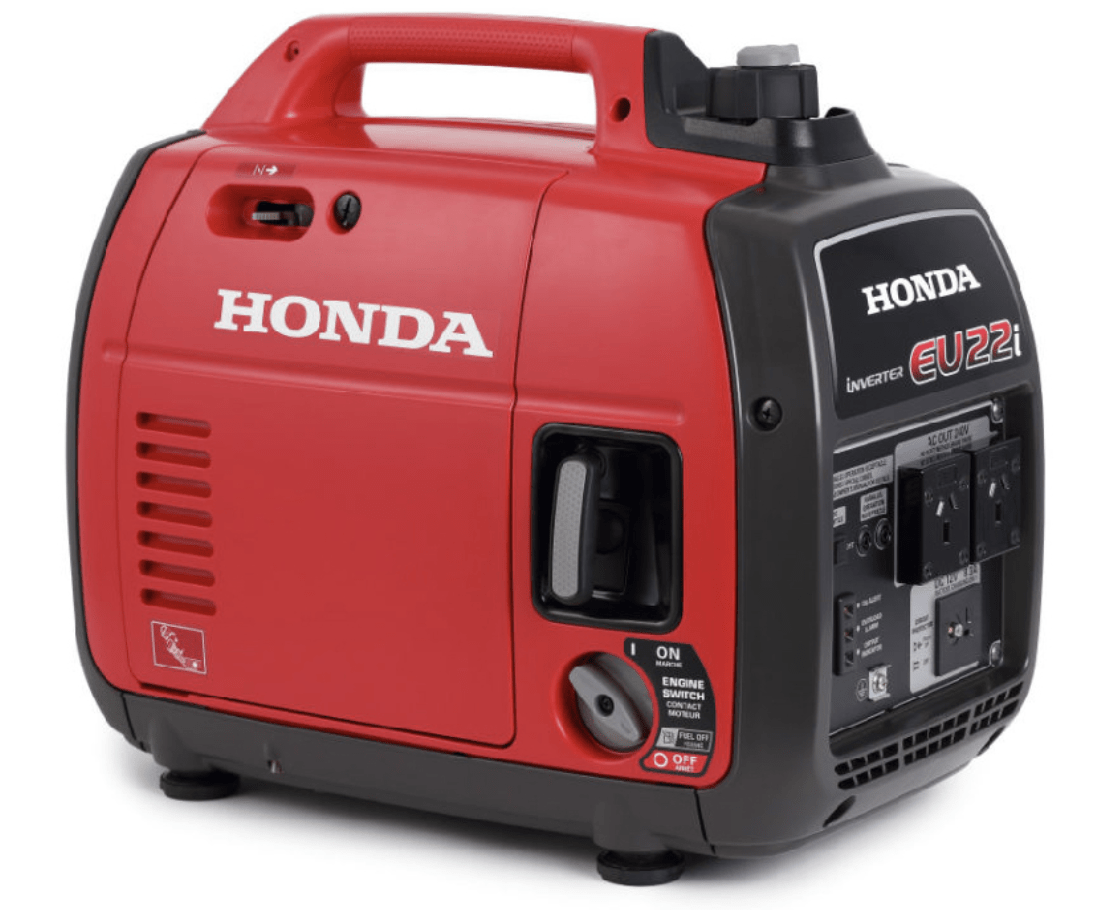
Petrol generators may offer 'endless' power, but they come with significant logistical drawbacks. They are noisy, disruptive to communication on set, produce exhaust fumes, and often require 50-metre cable runs just to distance the noise from the talent. Furthermore, many urban or environmentally sensitive locations now ban petrol generators entirely.
Enter the 2kWh lithium-iron-phosphate (LiFePO4) power station. These units are the lower cost, new-school way of delivering on-set power. They are completely silent, produce no emissions, and output clean AC power, making them safe for sensitive electronics. They may be heavy, but some even come with their own set of wheels.
A 2kWh unit can sit right at the base of your C-stand, acting as a sandbag while running a 600W LED continuously at full power for over three hours – or significantly longer if you dial the intensity down. Crucially, the cost per watt-hour is a fraction of what you would pay for cinema-grade V-Mount batteries or proprietary strobe battery packs.
Importantly, they are generally 'EV-grade' batteries that will run smoothly with minimal degradation for around 3,000 charge cycles, or equivalent to approximately 10 years of use depending on its usage. So apart from work, they can also be used for camping, picnics (running a sound system), van life or even backup power for your home.
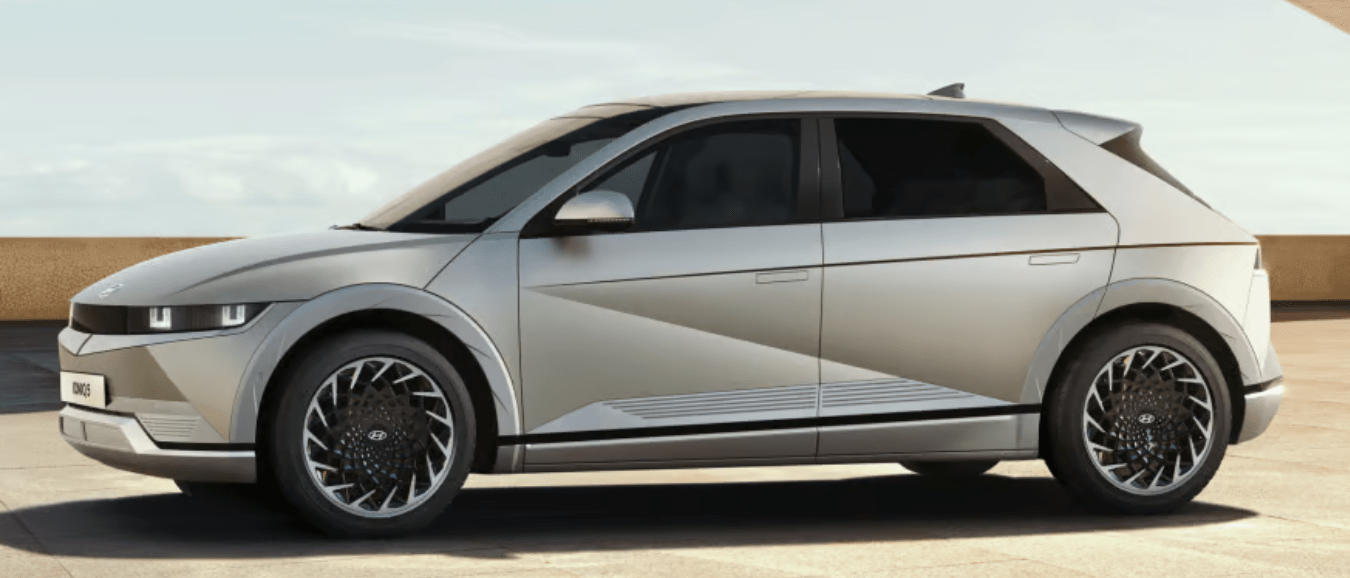
Image: Hyundai
The other alternative - your car
For shoots with vehicle access, the ultimate power station might already be parked on set. Several electric vehicles on the Australian market – such as the Hyundai Ioniq 5, Kia EV6, BYD Atto 3 and the late 2026 Tesla Model 3/Y – feature Vehicle-to-Load (V2L) technology where you can just plug lights directly into the car.
This allows the car's massive battery (often over 50kWh) to output 240V AC power via a standard plug adapter. Using an EV as a mobile 'mains supply' means you can run lights all day long without making a noticeable dent in the vehicle's driving range, thus eliminating the need for external batteries altogether.
In Australia, many vehicle-to-load systems can provide a maximum output of 3.6 kW (3,600 watts) via a 15-amp connection. At exactly 1,000W per light: You can safely run up to three of them simultaneously, totalling 3,000 watts.
Attempting to run a fourth would push the draw to 4,000 watts, which exceeds the 3.6 kW limit and will trip the car's inverter safety breaker.
The current portable power station market
If mains power is impractical, or if you cannot park an EV next to your set, a dedicated power station could be the best solution. Here are a few notable options currently available on the Australian market. However, if buying outright doesn't suit your budget, most major camera rental houses also offer these units for hire.
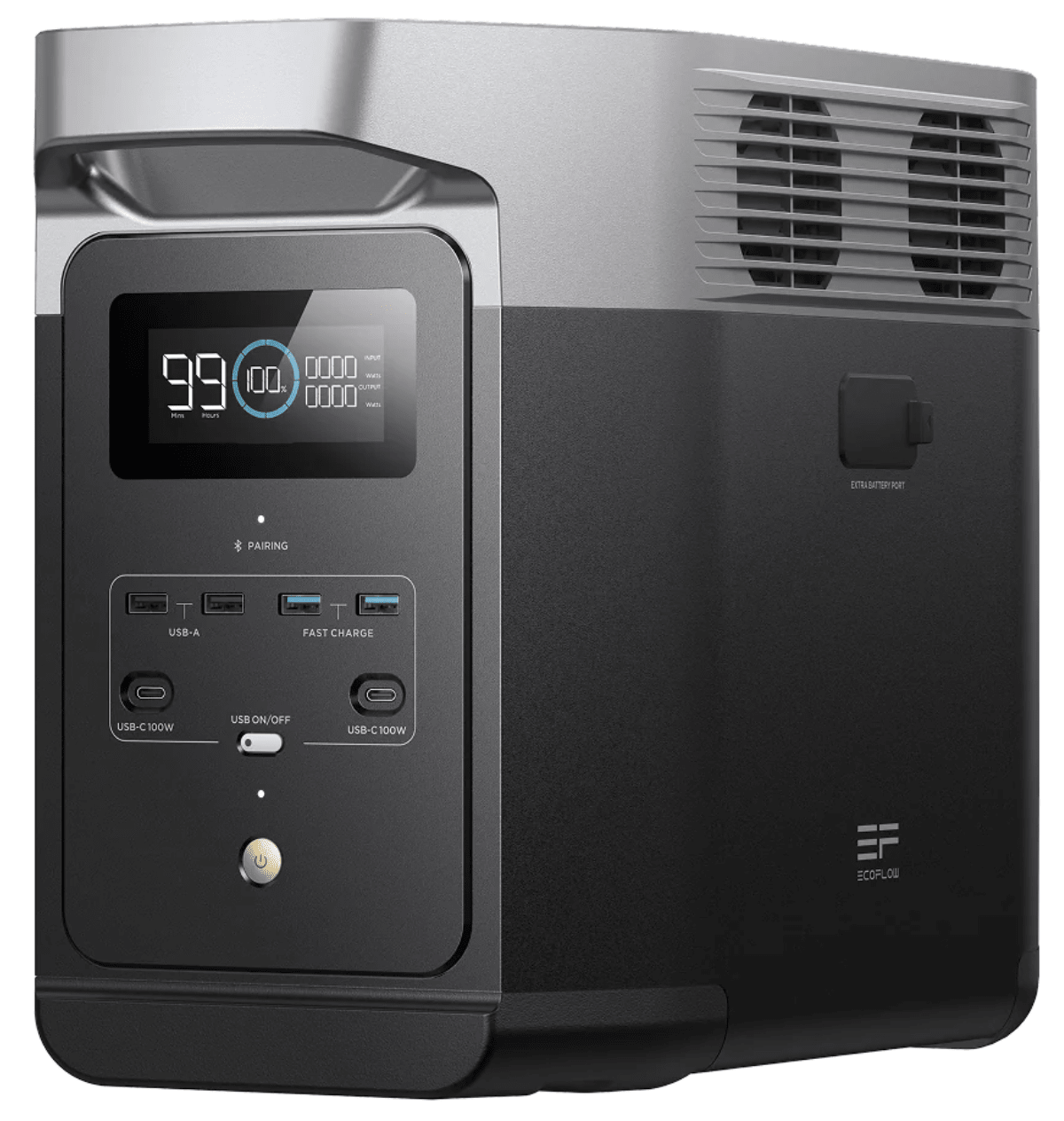
EcoFlow Delta 2 Max
Capacity: 2048Wh
AC Output: 2400W
Weight: 23 kg
Price: Approx. $2,170 – $2,399
EcoFlow is a dominant player in the creative space. The Delta 2 Max is highly regarded for its rapid charging speeds – going from zero to 80 per cent in just over an hour. It provides enough sustained output to comfortably run two 600W LEDs simultaneously, making it a reliable hub for a two-light fashion setup.
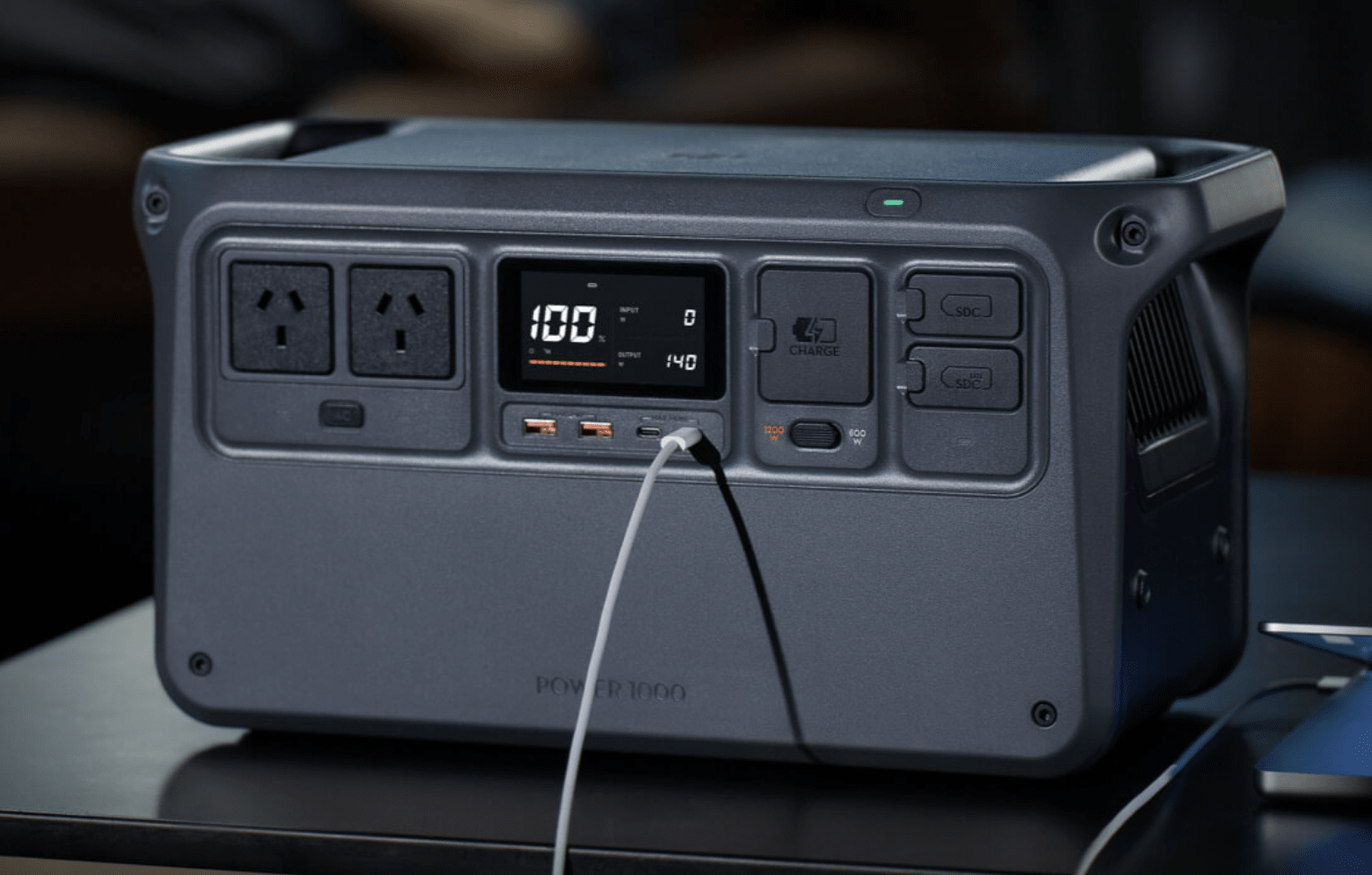
DJI Power 1000 v2
Capacity: 1024Wh
AC Output: 2600W
Weight: 14.2 kg
Price: Approx. $1,119 – $1,199
While smaller than the 2kWh standard, DJI's entry into the power station market is explicitly tailored to creatives. It brings dual 140W USB-C ports alongside robust AC output, allowing you to charge drones, laptops, and camera batteries directly. It is also exceptionally quiet under heavy load, which is critical for video sets where audio capture is required.
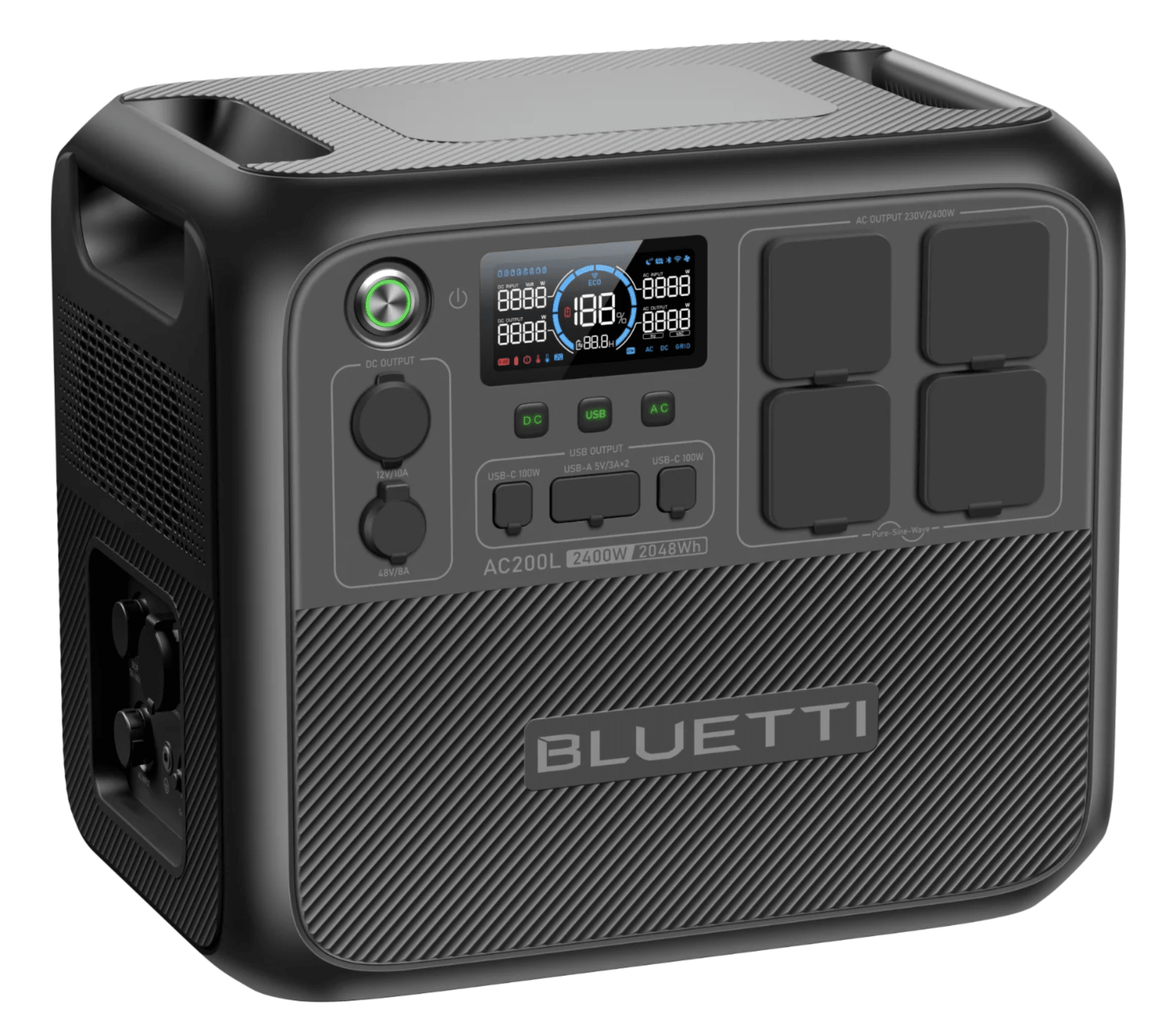
Bluetti AC200L
Capacity: 2048Wh
AC Output: 2400W
Weight: 28.3 kg
Price: Approx. $2,799
A direct competitor to the EcoFlow, the AC200L uses long-lasting LiFePO4 chemistry and offers a wealth of output ports. It is built tough, though slightly heavier than some rivals, making it a rugged workhorse for location fashion work that goes off the beaten track.
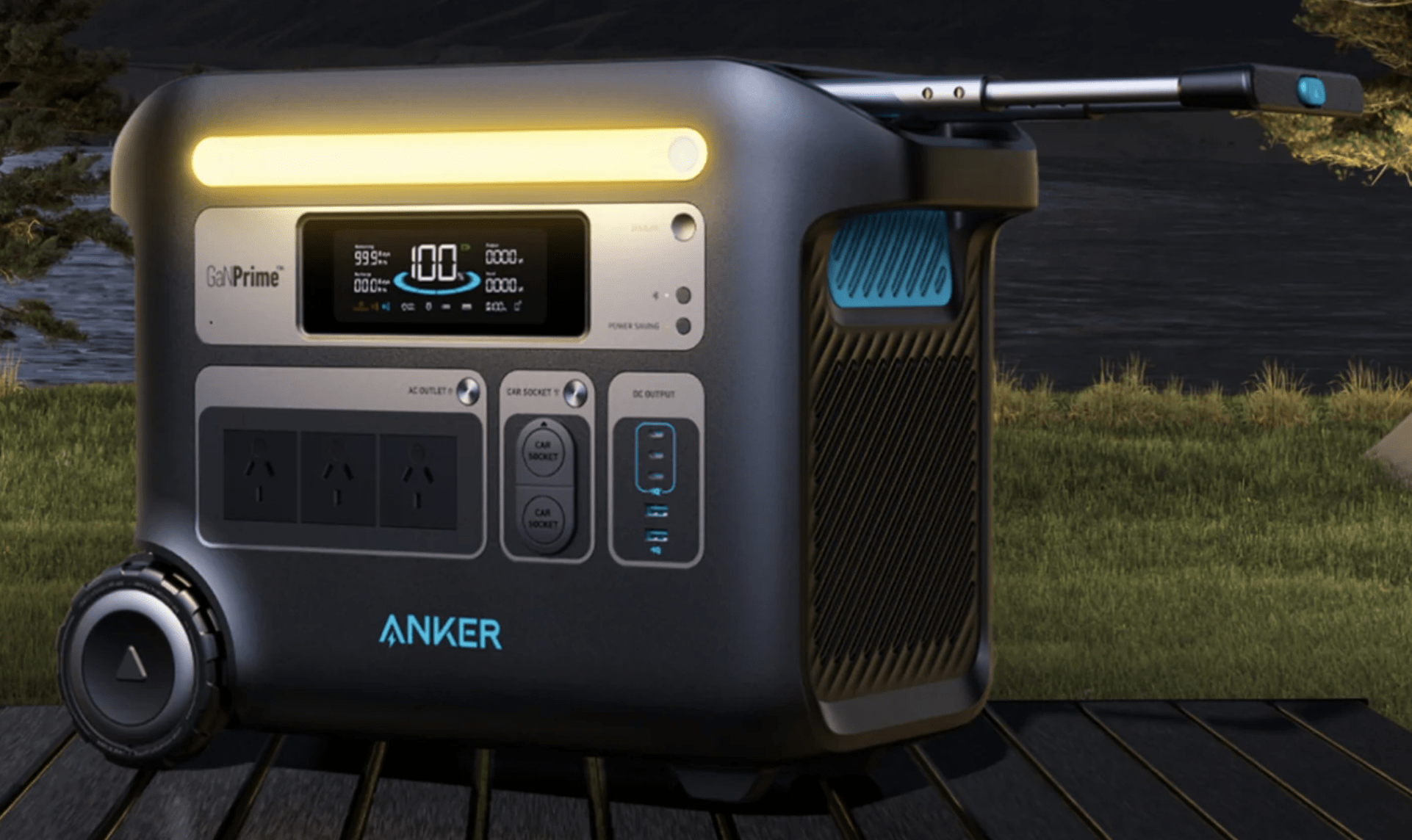
Anker SOLIX F2000 (PowerHouse 767)
Capacity: 2048Wh
AC Output: 2400W
Weight: 30.5 kg
Price: Approx. $2,499
Anker's flagship power station features a highly practical suitcase-style design with built-in wheels and a retractable handle. When you are hauling light stands, modifiers, and camera gear across a location, being able to simply roll your 30.5-kilogram power source across the pavement is a massive ergonomic advantage.
The wrap up
Ultimately, the real value of these power solutions extends beyond raw watt-hours. It is about the practical ability to run high-output continuous lighting in a remote landscape or a quiet urban street without the usual logistics issues.
While these high-capacity power stations remove the headache of managing petrol generators, or running a ridiculously long power cable from somewhere, they introduce a new physical reality – you are essentially having to lug a dense 30-kilogram block of lithium.
If your location requires a long walk from the vehicle, you will definitely want some strong photographic assistants on your crew. Hauling that kind of dead weight by hand is a fast track to fatigue and back-ache before the first frame is even captured.
To save your crew's backs, practical transport solutions are essential.
A rugged, collapsible trolley with pneumatic tyres is virtually mandatory for navigating urban environments and paved paths. For more ambitious, off-grid terrain – like fire trails or uneven coastal tracks – hitching a gear trailer to a capable electric bicycle running gravel tyres is an effective way to haul the payload directly to the set.
Ultimately, treating these larger power units as heavy grip gear rather than casual camera accessories will keep your location workflow efficient and your team happy.