


As photographers, we’ve learned to take smartphone camera announcements of 'best phone ever' with a heavy grain of salt. The new iPhone 18 Pro does bring some genuinely intriguing photographic tools to the table, but it also carries its fair share of marketing spin, not to mention heavily increased price.
Along with some new photo-centric features, the new 18 Pro model with 1TB of storage now costs $3,299 – while the 18 Pro Max with 1TB of storage will set you back $3,499. For the 18 Pro, that represents a steep 18% hike – a direct $500 jump in a single year over the equivalent iPhone 17 Pro 1TB, which originally launched at $2,799.
So with an ongoing cost-of-living crisis – is it better to stick with your older iPhone, or does the new model really justify the upgrade (and price)?
Lens updates
This year, Apple has packed four distinct lenses into the chassis (including the 18MP f/1.9 selfie camera), covering the 35mm equivalent focal lengths of 13mm, 24mm, 100mm on the back.
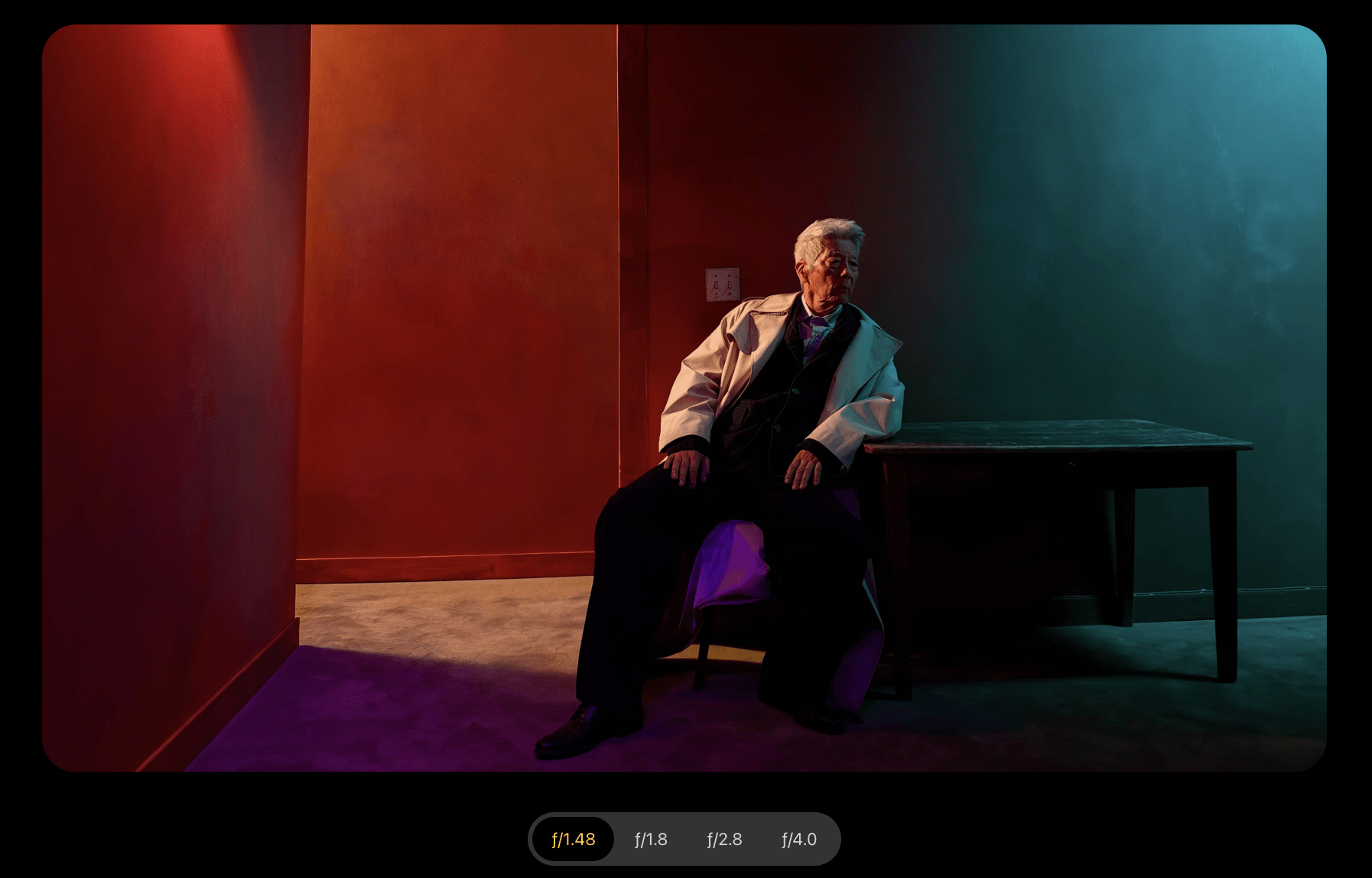
Optic wise, the iPhone 18 Pro features a new maximum aperture of f/1.48 on its main sensor – a welcome bump of half-a-stop of extra light compared to the iPhone 17 Pro's f/1.78 aperture. This allows just a little more light (50%) to hit the sensor, enabling you to shoot at a slightly lower ISO, or higher shutter speeds in dim conditions for cleaner images.
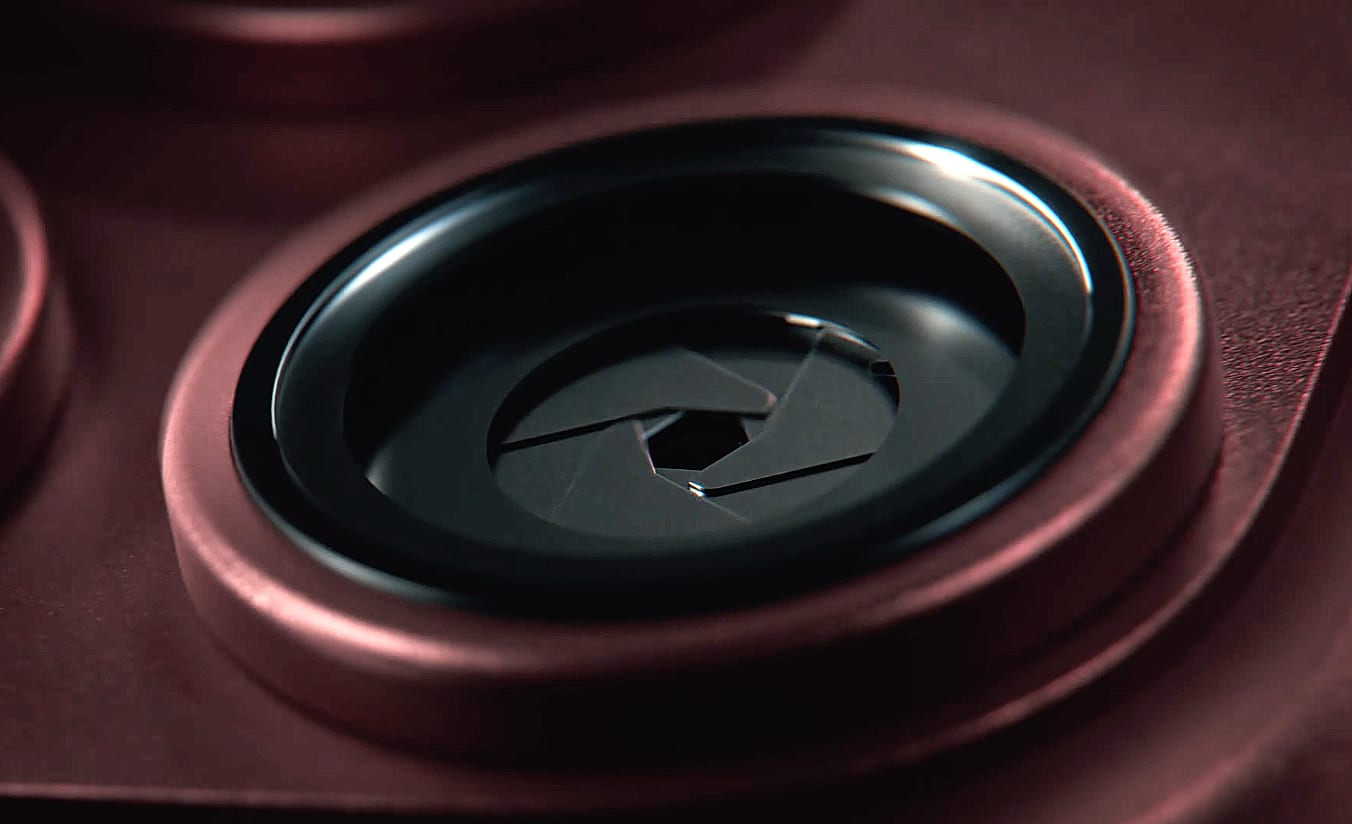
On the 'main' 24mm lens, Apple has introduced a mechanical aperture diaphragm that allows nearly three stops of light control – from f/1.48 to f/4. At first glance, this seems incredibly gimmicky, however, we know that stopping down does, or at least should, increase image quality and edge-to-edge sharpness just like on normal camera lenses.
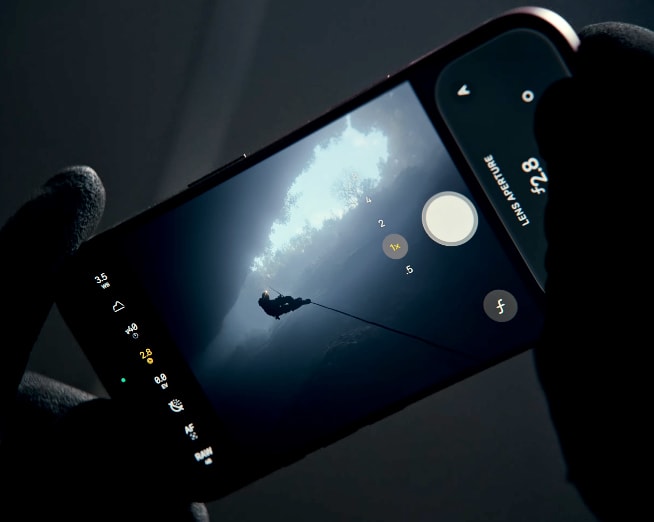
Just don't expect miracles with real bokeh and the fact that stopping down on such a small lens and sensor – doesn't really increase depth of field much unless you are extremely close to your subject.
Where stopping down is useful is when shooting 'cinematic' footage that adheres to 24fps or 25fps and 1/48 or 1/50 shutter speed. While f/4.0 doesn't really cut enough light for full sunlight (you'd need ND filters), it is still a welcome addition for lower light video shooting.
Then there's the much-touted 'fusion telephoto.' Let’s be clear – it isn't a real mechanical telephoto zoom lens. Likewise, Apple's claim of having 'optical-quality' zoom is marketing hype – it’s just clever software cropping and interpolation, not a real optical zoom.
Are the 3 rear cameras utilising real 48MP sensors?
Apple's use of computational photography to sidestep the physical hurdles of tiny sensors is remarkable. The sensor physically contains 48 million light 'photosites', but it clusters them under colour filters in groups of four to balance bright-light sharpness with low-light performance.
In dim interior or night time conditions, which may be four to five stops lower light than daylight, it combines these tiny pixels into larger 'super pixels' to produce cleaner, brighter 12 MP or 24 MP photos with lower noise.
In full daylight, all 48 million pixels capture sharp edges and fine details directly – which also lets you zoom to 2x without noticeable quality loss (at least on a phone screen) by simply cropping into the centre of the sensor – while clever internal software fills in the colour gaps to deliver a high-resolution file.
Finally – manual camera controls

Thankfully, the native camera app has finally been upgraded to include dedicated ‘Pro’ controls, granting direct command over shutter speed, aperture, white balance, and even a live histogram.
Where photographers previously had to lean on third-party software for manual adjustments, having this degree of precision built straight into the native camera app is a very welcome addition.
That said, Apple has yet to clarify whether these manual tools will trickle down to earlier iPhone models via iOS software updates.
Video shooters will also favour the new cinema mode for shooting, which sits alongside ProRes RAW recording and a new 4K timelapse feature.
There is even a feature to audio mix for music, giving hybrid shooters serious onboard post-production power.
Apple Reference Image Mode
It is well documented that photographers, and the general public despise AI imagery and camera companies have integrated 'content credentials' to hardware and file systems to ensure we can test what is and isn't 'real'.

Apple has now joined the fray with a new authenticity capture mode that embeds cryptographically signed raw sensor data directly into the file metadata, creating an unalterable provenance trail confirming the frame was captured optically through the camera rather than synthetically generated or altered. Bravo!
New powerful A20 Pro chip – onboard AI

Under the hood, the new A20 Pro chip is a beast. Apple has completely redesigned the thermals, meaning the processor is cooled far better than in previous iterations, resulting in increased battery life and less thermal throttling (computers are slowed down if they get too hot).
This chip enables serious onboard AI capabilities. We now have 'smart focus tracking' that mimics our dedicated mirrorless cameras, as well as an AI 'extend background' feature.
While the iPhone’s native Photos app has long offered decent object recognition for search, Apple Intelligence should take it to another level.
With Siri and on-device machine learning significantly expanded, you can now pinpoint specific images simply by describing the scene in plain English.
Satellite communication & tough build

Being lost in the Australian bush is no joke – upwards of 1,000 people go missing out there every year.
So whether you wander off the bush track, or you find yourself with a broken down car in the desert in some Wolf Creek psychopath situation far beyond standard mobile reception, Apple’s new satellite connectivity can help you to safety.
You can also summon roadside assistance via satellite, offering travelling landscape shooters genuine peace of mind on remote assignments.
Durability is another strong suit, with the chassis and camera array rated IP68 for water resistance down to a depth of six metres for up to 30 minutes – offering reliable reassurance against sudden downpours, surf spray, or accidental submersion in the field.
Once back within reach of mains power, the upgraded USB-C port delivers the fastest charging speeds yet. When paired with a 60W power adapter (sold separately) the handset can replenish 50% charge in just 15 minutes, or several hours of use in only 5 minutes charge. Overall battery life is up from 31 to 34 hours of video playback, with general use being reportedly easily beyond a full days use.
So - should you buy an iPhone 18 Pro?
There is no denying that the iPhone 18 Pro brings genuine, tangible photographic advancements to the table. The addition of a mechanical variable aperture, built-in manual exposure controls, cryptographically signed image credentials, and rock-solid outback satellite connectivity make it arguably the most serious pocket tool Apple has ever built for visual creators.
For working hybrid shooters and remote landscape photographers, these aren't just incremental software parlour tricks – they are practical, field-ready features that directly address real-world shooting demands.
Yet in a broader economic climate where everyday household budgets are stretched to their limits, that progress comes at an eye-watering cost. When a 1TB model commands an 18% price hike to cross the $3,200 threshold – and the 2TB version sails past $4,400 – the value equation changes dramatically. Paying an extra $1,200 for an extra 1TB borders on ludicrous.
If you are already carrying an iPhone 16 Pro or 17 Pro, the physical sensor improvements and clever onboard processing simply don't justify the brutal financial hit. At time of writing, we don't know which upgrades will be available for previous iPhone models.
Unless your mobile workflow genuinely hinges on being a tik-tok star, or native manual dials, satellite safety off the grid, or authenticated editorial provenance, this is one generation where holding onto your current handset isn't just sensible – it is by far the smarter call.
iPhone 18 Pro and iPhone 18 Pro Max will be available in 256GB, 512GB, 1TB, and 2TB storage capacities. Available in burgundy, glacier, silver, and black, iPhone 18 Pro 256GB starts at RRP A$2099 inc.GST, and iPhone 18 Pro Max 256GB starts at RRP A$2,299 inc. GST.
Pre-order starts at 10:00 pm AEST on Saturday 12 September 2026, with delivery date starting on 18 September.
You can find out more on the Apple website.