

Founded in Göttingen, Germany in 1969 by printer and designer Gerhard Steidl, the publishing house Steidl Verlag began as a modest screen-printing workshop for graphic art and posters.
In its early years, Steidl produced political non-fiction before broadening its scope into German literature and visual arts. A major turning point arrived in 1993 when Steidl secured global publishing rights for Nobel laureate Günter Grass, establishing the press as a literary powerhouse.
However, it was the launch of its international photobook program in 1994 that permanently transformed Steidl into an undisputed titan of visual culture.
Operating out of its historic headquarters at Düstere Strasse 4, Steidl became world-renowned for its rare, fiercely independent approach to manufacturing. Every stage of production – from typography and paper selection to pre-press, printing, and binding – took place under one roof, with Gerhard Steidl personally overseeing every project.
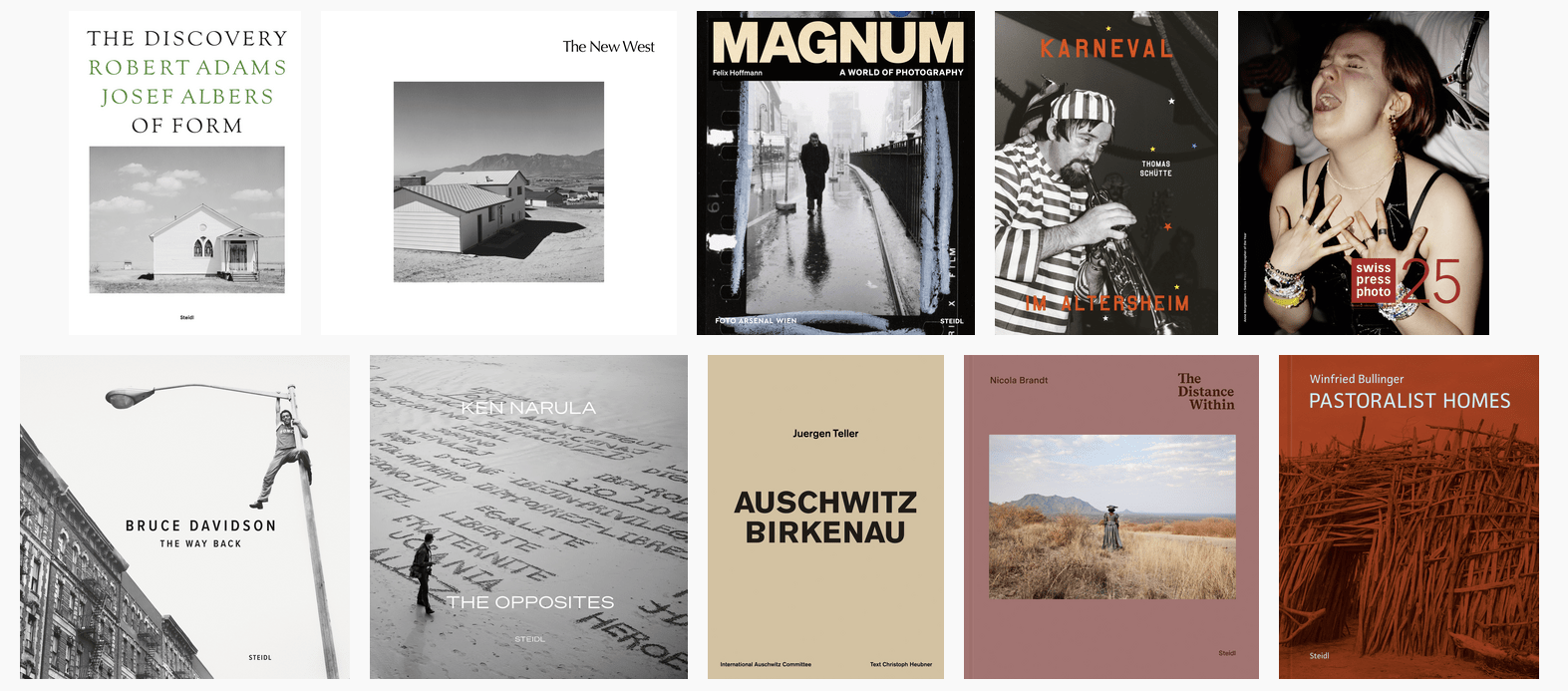
The house produced some of the most sought-after and highest-selling photobooks in history, most notably the definitive re-edition of Robert Frank's seminal The Americans, Karl Lagerfeld's iconic fashion titles such as The Little Black Jacket, Joel Sternfeld's American Prospects, and landmark monographs by Bruce Davidson, Nan Goldin, and Gordon Parks.
Other renowned photographers featured include Edward Burtynsky, William Eggleston, Robert Adams, Lewis Baltz, Dayanita Singh, and Juergen Teller.
For decades, Steidl stood as the gold standard of art publishing, offering uncompromised craftsmanship at accessible price points.
Rumours of financial difficulty
In July 2026, news broke that the Göttingen District Court had initiated preliminary insolvency proceedings against Steidl. Industry observers feared that one of the photobook world's pillar institutions was on the verge of total collapse.
Rumours quickly spread across the art world that Steidl was bankrupt and shutting its doors. The reality, however, proved more nuanced. The legal catalyst for the proceedings was a surprisingly small claim – roughly €2,900 in unpaid social security contributions filed by an employment agency.
Within two weeks, the insolvency filing was discontinued after the outstanding amount was settled, quashing immediate fears of liquidation.
The harsh reality – liquidity and export pressures
While Steidl avoided immediate bankruptcy, the court filing exposed deep underlying financial strain. Industry analysts note that Steidl is illiquid rather than insolvent – though is holding immense physical and cultural assets, but suffering from acute cash flow bottlenecks.
Several factors have combined to create this liquidity crisis.
First, labour court claims revealed that employee wages had been delayed by several months in some cases, prompting ongoing legal actions from staff representatives.
Second, sales have cratered by reportedly 50%. Steidl exports roughly 95 per cent of its titles, and the Chinese market – once accounting for nearly a third of sales, virtually vanished due to tightening censorship, while heavy US tariffs further eroded profit margins. A waning interest in photo books among younger generations has also contributed to the decline in sales.
Third, the press's high operational costs and insistence on keeping all production in-house created long production cycles, massive print runs, and minimal commercial guardrails. Finally, this financial friction cost Steidl valuable rights, including losing the works of Nobel laureate Günter Grass following repeated payment defaults to the author's foundation.

The art world cannot afford to lose Steidl
At 75 years old, Gerhard Steidl has acknowledged that the wider book industry is facing exceptional hardship. To safeguard the press, active negotiations are under way with potential international investors from the US, Switzerland, and Asia to recapitalise the business and establish a long-term succession plan.
Though the press remains in fragile territory, its unmatched printing legacy offers a strong incentive for potential backers looking to keep high-craft photobook publishing alive.
You can see the Steidl current catalog of photobooks on their website here.