

Los Angeles Centre of Photography

Amidst the dusty desert heat and Hollywood’s manufactured perfection, the Los Angeles Center of Photography (LACP) offers something rare: a real sanctuary. It is the beating heart of a photographic community where kindred spirits find a home.
For over two decades, the Los Angeles Center of Photography (LACP) has served as an important focal point for visual storytellers. As a 501(c)3 non-profit organisation, LACP provides a space for artists at all stages of their careers to hone their craft, experiment, and articulate their unique voices.
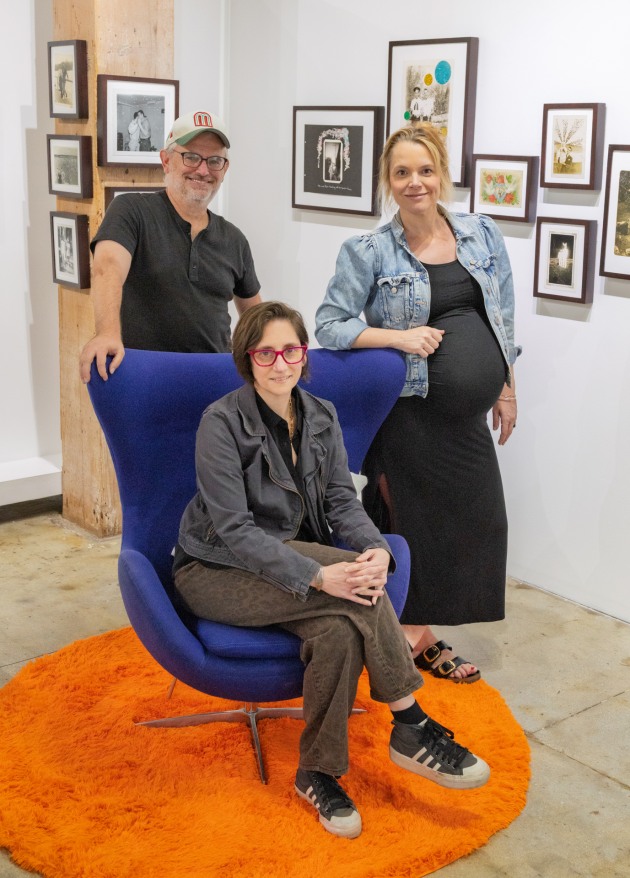
Founded originally under the name Julia Dean Photo Workshops, it first opened in Venice Beach. After about ten years, the organisation moved to a bigger space in Hollywood. In 2019, LACP moved back West to a large space in Culver City with classrooms, a digital lab, a large gallery, a library, and a darkroom. The space was closed in March 2020 due to the pandemic and has recently reopened in the Downtown Area, which, for lack of a better word, is… a bit sketchy. Doors have to be kept closed at all times, and entry is accessed by visual cues that suggest you look like you are into photography.
Not only do they put on monthly and travelling exhibitions, they also host an exhaustive list of more than 140 different programs, workshops, and classes. These range from printing and designing photobooks to location shoots, portrait lighting sessions, art photography writing, and post-production techniques. And all are taught by more than 150 instructors.
Funding for the Centre comes from art print sales, school fees, yearly memberships, mentorships, webinars, and donations (Government Arts funding assistance was recently withdrawn).
The team and the space
Upon arrival, I was surprisingly greeted by an Australian voice – that of Janis McGavin (Director of Marketing & Social Media), who was originally from New Zealand and raised in Australia. She was a member and volunteer for several years before joining the LACP team in 2019. At the time of writing, she was, to use her words, ‘totally up the duff’ (8 months pregnant) – a description which seemed to confuse her American cohorts Brandon Gannon (Director of Operations and Education) and Dr. Rotem Rozental (Executive Director & Chief Curator).
The three-story building (they currently occupy two stories, with maybe the third on the cards) is a considerable space. Downstairs holds a large gallery space, print room, offices, and a library. Upstairs, there is another large gallery space which doubles as a classroom, storage for camera equipment and framed photos, as well as a photo studio.
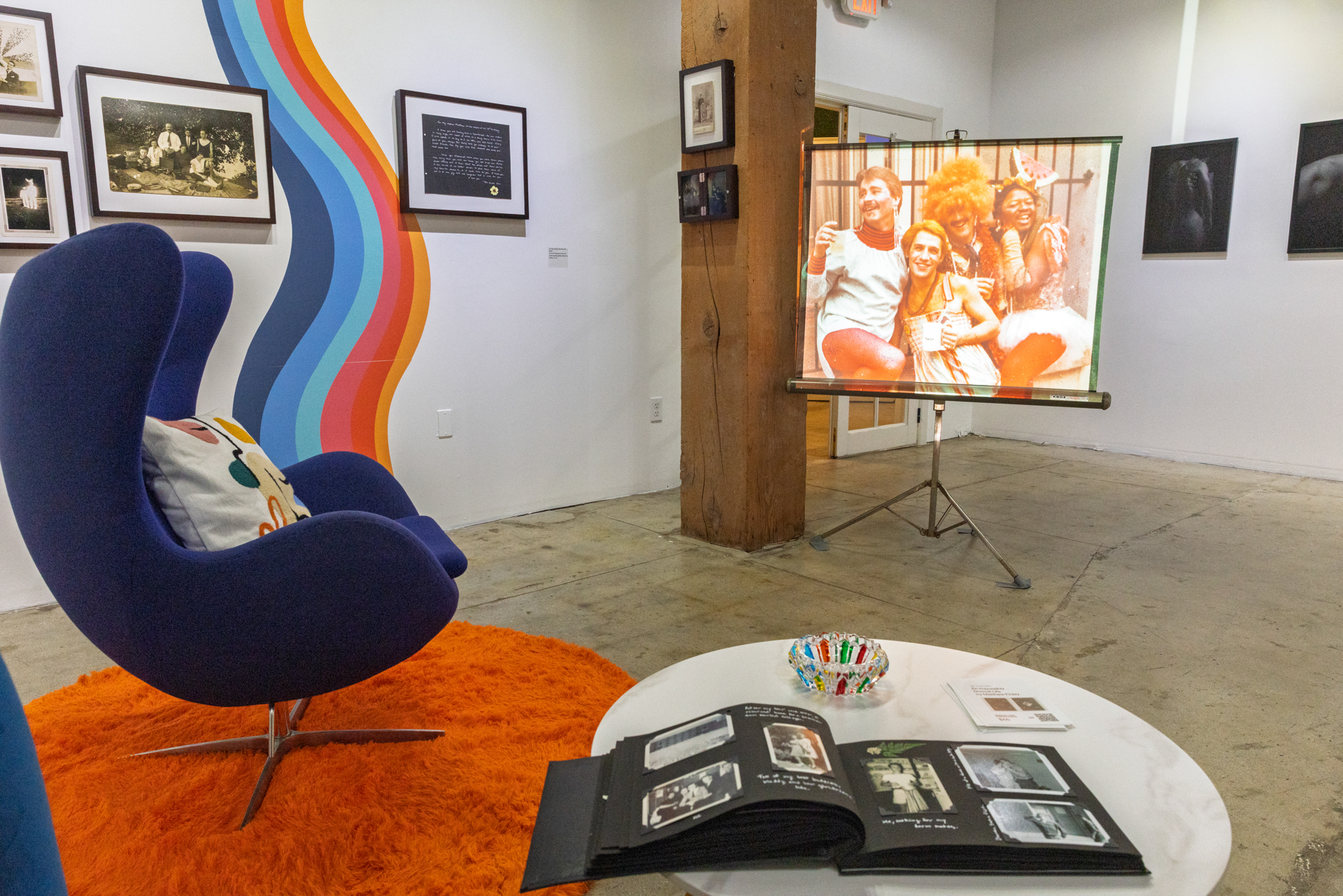
Current Exhibition: Lost and Found by Matthew Finley
Matthew Finley is an LA-based photographer whose work has been shown in solo and group shows in multiple top-tier galleries across the U.S. and internationally. In his current show, apart from an interesting array of images that include Ambrotypes and Tintypes (wet plate photographs), he also hosted a ‘found photograph’ section that was quite unique in its concept and delivery.
Over four years ago, Matthew’s mother mentioned that he had an uncle who ‘may have been gay’. Matthew started searching eBay for found photos of what would resemble ‘an average dark-haired guy’ to cast as a fictitious ‘Uncle Ken’. Ken’s life in the 1960s and 70s would be revealed in a photobook called ‘An Impossibly Normal Life’, in which he found a new life full of acceptance, friends, and love.
This brings up an interesting point: it is crazy to think that it was ‘illegal’ to be gay in many parts of the world. This was true even up to 1997 in Tasmania, while in the US, it wasn’t until mid-2003 that laws were passed to allow same-sex love. Bizarrely, it is still illegal in 65 countries to this day.
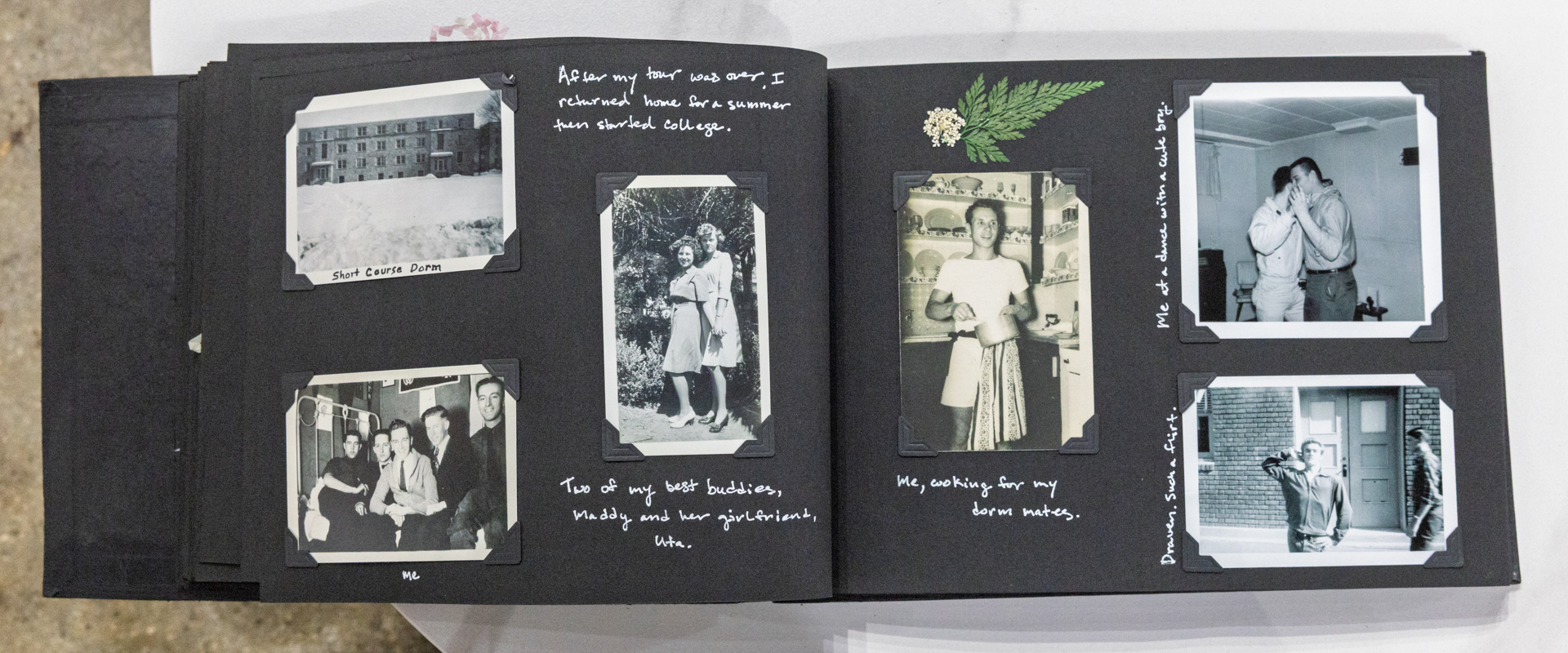
A published version is available by Fall Line Press.
Photo: Tim Levy
What is fascinating about the photobook/diary is that being gay in the 1960s would have had to be a bit of an ‘undercover operation’ in public, while behind closed doors, a more casual approach to being who you are could be displayed. It makes you wonder: were photographed ‘transgressions’ ever reported by One-hour Photo Lab workers like some Big Brother system? The answer is sadly yes.
In any case, these found, repurposed images were compiled into this photobook titled An Impossibly Normal Life, as well as sold as exhibition prints. Another novel approach to the display was a simulated ‘slide-show’ complete with the accompanying ‘chick-chack’ sound of the slides being replaced – when, in reality, it was a digital projector displaying the ‘slides’ on a 1960s projector screen.
Centres of Photography in Australia
Back home, we have a few similar ‘centres of photography’ such as the Centre of Contemporary Photography (Est. 1996) in Melbourne and Photo Access in Canberra (Est. 1984).
On a more sombre note, in other major cities: Sydney’s Australian Centre of Photography (Est. 1973) kept downscaling until it ceased to exist, then was acquired by Powerhouse Museum in 2022, and is currently dormant. The Queensland Centre for Photography (Est. 2004) closed in 2014 after it had its Government Arts funding withdrawn in 2013. Perth Centre of Photography (Est. 1992) is also in a ‘hibernation state’ while they search for a new venue.
Photography is experiencing a massive resurgence as a hobby, largely because smartphones have turned everyone into a potential photographer. This popular boom, however, runs parallel to a significant operational challenge: escalating real estate prices in major cities are making it financially precarious to operate dedicated photographic ventures.
While we all hope for the return of Sydney’s ACP and Perth’s PCP, their situation is a potent warning. It reinforces the critical need to support the institutions we still have – not just with a low-effort social media ‘like’ – but by physically attending exhibitions and events instead of living vicariously through our phones.
You can find out more about LACP on their website here.